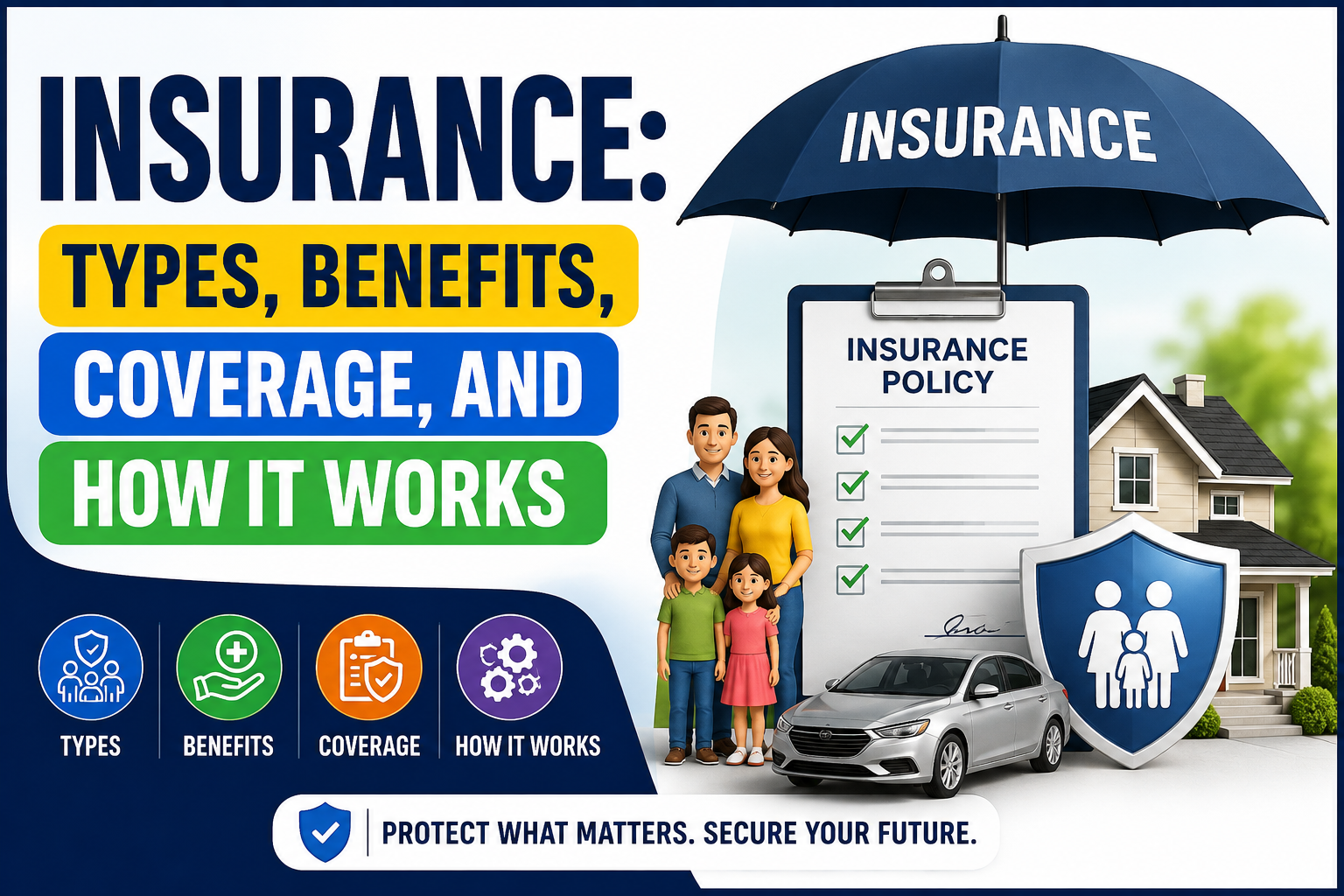
Insurance is an important part of financial planning. It helps individuals, families, and businesses manage the financial impact of unexpected events such as accidents, illness, property damage, theft, disability, or death. Instead of paying the entire cost of a covered loss, the policyholder pays a premium to an insurance company in exchange for financial protection.
Understanding insurance is important before purchasing a policy. You should know what is covered, what is excluded, how deductibles work, and how much protection you actually need.
What Is Insurance?
Insurance is a risk-management agreement between a policyholder and an insurance company. The policyholder pays a premium, while the insurer agrees to provide benefits for specific covered events according to the policy terms.
For example, auto insurance may help pay for certain losses after a covered accident. Health insurance can help with eligible medical expenses, while homeowners insurance may protect against certain property losses.
According to the National Association of Insurance Commissioners (NAIC), insurance helps people manage financial risks associated with unexpected losses.
However, insurance does not cover every possible situation. Coverage depends on the policy’s terms, limits, exclusions, and conditions.
How Does Insurance Work?
The process usually begins when you select an insurance policy and agree to pay a premium. Premiums may be paid monthly, quarterly, or annually.
If a covered event occurs, you can submit a claim to the insurer. The company reviews the claim and determines whether the loss qualifies for coverage. If approved, the insurer pays according to the policy, while the policyholder may have to pay a deductible.
The cost of insurance can depend on factors such as coverage amount, risk level, deductible, location, and the type of policy.
Common Types of Insurance
1. Health Insurance
Health insurance helps people manage eligible healthcare expenses. Depending on the plan, it may cover doctor visits, hospital services, prescription medicines, and other healthcare costs.
When comparing health insurance, consider premiums, deductibles, provider networks, copayments, coinsurance, exclusions, and out-of-pocket limits.
2. Life Insurance
Life insurance provides financial support to beneficiaries after the insured person’s death. It can help families manage living expenses, debts, education costs, and other financial responsibilities.
The two common categories are term life insurance and permanent life insurance. Term insurance provides coverage for a specified period, while permanent policies are generally designed to provide longer-term coverage and may have cash-value features.
3. Auto Insurance
Auto insurance protects drivers against certain financial losses related to accidents, vehicle damage, and liability. Available coverage varies by location and policy.
Drivers should pay particular attention to liability limits because a serious accident can create substantial financial obligations.
4. Homeowners and Renters Insurance
Homeowners insurance can provide protection for a home, personal property, and liability against covered risks. Renters insurance generally focuses on personal belongings and liability rather than the building itself.
Some risks, such as floods or earthquakes, may require separate coverage.
5. Disability Insurance
Disability insurance can provide income replacement when a qualifying disability prevents someone from working. It can be particularly valuable for people who depend heavily on their employment income.
Important Insurance Terms
Understanding common insurance terms makes policies easier to compare:
- Premium: The amount paid for insurance coverage.
- Deductible: The amount you generally pay toward a covered loss before insurance contributes.
- Coverage: The protection provided by a policy.
- Claim: A request for benefits following a covered event.
- Policy limit: The maximum amount the insurer will pay for specified coverage.
- Exclusion: A situation or loss that the policy does not cover.
- Beneficiary: A person or organization designated to receive certain insurance benefits.
How to Choose the Right Insurance
The right insurance depends on your financial situation, responsibilities, assets, and potential risks.
Start by identifying events that could cause serious financial difficulty. Then compare policies based on more than price. Look at coverage limits, deductibles, exclusions, premiums, claim procedures, renewal conditions, and optional benefits.
A cheaper policy may provide less protection or have a higher deductible. Therefore, the lowest premium is not always the best option.
Review your insurance when your circumstances change. Buying a home, changing jobs, starting a business, getting married, or having children can affect your insurance needs.
Cautions Before Buying Insurance
Do not assume that every loss is covered simply because you have an insurance policy. Carefully review exclusions and coverage limits before purchasing.
Also, provide accurate information when applying for insurance. Incorrect information can create problems when making a claim.
Avoid choosing coverage based only on price. Make sure the policy provides adequate protection for your specific circumstances.
Finally, keep track of renewal dates and payments so that important coverage does not unintentionally lapse.
Final Thoughts
Insurance can help protect your finances from unexpected losses. Health, life, auto, homeowners, renters, disability, and business insurance each serve different purposes.
The best approach is to understand your risks, compare policies carefully, and select coverage that fits your needs and budget. Always read the policy documents and ask questions about anything you do not understand.
Disclaimer
This article is for general educational purposes only and does not constitute financial, legal, tax, or insurance advice. Insurance rules, products, prices, coverage, and requirements vary by location and individual circumstances. Consult a qualified, licensed insurance professional before making important insurance decisions.
Caution
Never purchase, cancel, or replace an insurance policy based solely on this article. Verify current terms, exclusions, limits, deductibles, and applicable regulations directly with the insurer or an appropriately licensed professional.